


When I first moved into production support, I believed that alerts existed for a clear reason. In my mind, every ping, every SMS, and every phone call meant that something genuinely needed attention.
I treated monitoring dashboards almost like medical instruments in an ICU. If a number moved, I assumed it was meaningful. If an alert triggered, I assumed a patient was crashing.
Reality was very different.
Within a few weeks of being on call, I realized that production monitoring was less like a hospital and more like a fire alarm that went off every time someone lit a candle. The volume of noise was overwhelming, but the actual risk was often low.
At 2 AM, my phone would vibrate. Sometimes it was a pod restart that Kubernetes had already healed. Sometimes it was a CPU spike that lasted thirty seconds. Sometimes it was a warning threshold set so conservatively that even normal traffic would trigger it.
Each time, I would wake up, log in, check dashboards, confirm nothing was broken, and go back to sleep.
Over time, this pattern repeated itself dozens of times.
What management saw was, “Our monitoring is working.”
What I experienced was, “I am being woken up for nothing.”
How organizations accidentally create alert fatigue
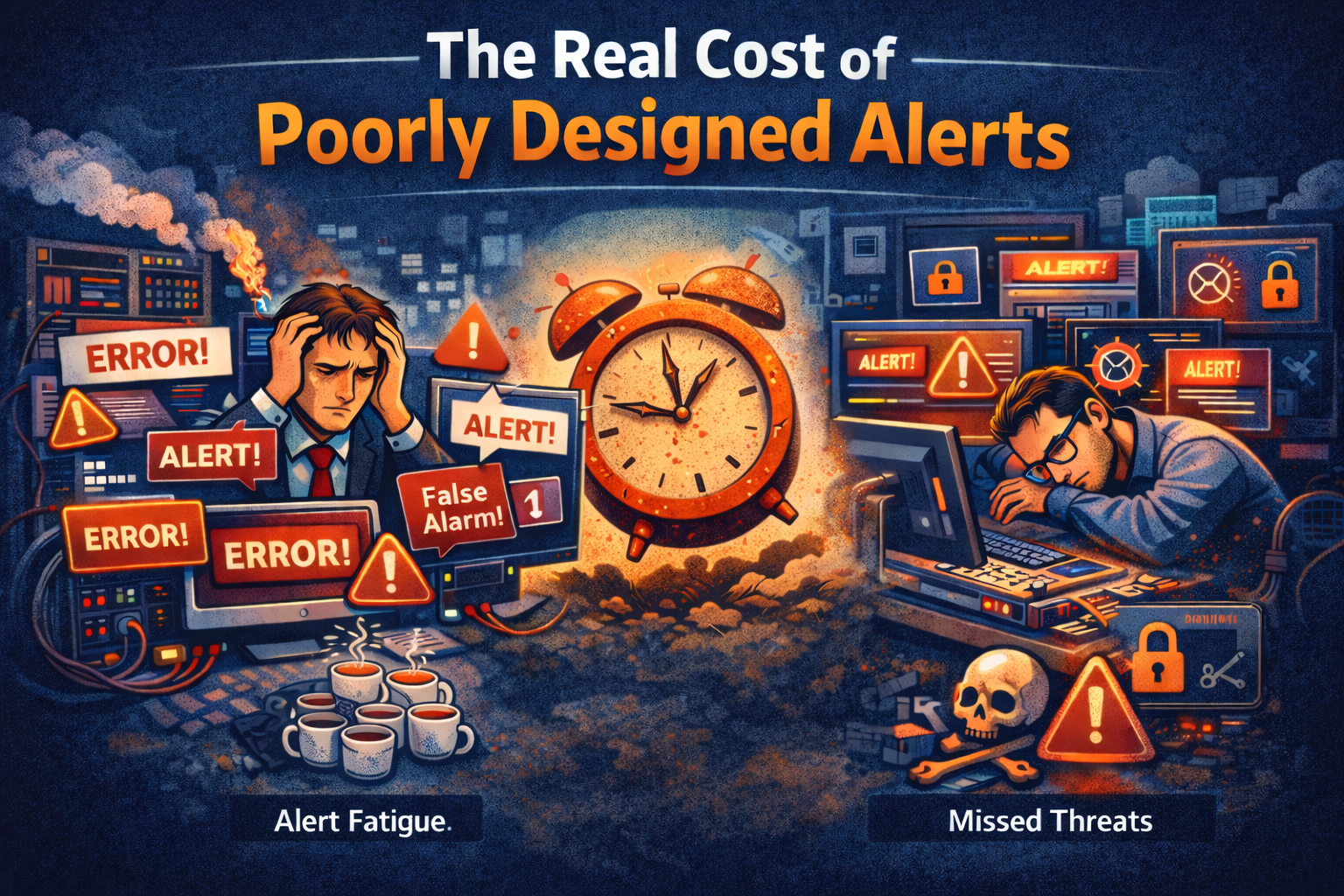
Alert fatigue does not start with engineers becoming careless. It starts with poorly designed monitoring systems.
In many organizations, alerts are created by people who rarely handle incidents themselves. They sit in planning meetings, set thresholds, and declare that “better to be safe than sorry.”
On paper, that sounds responsible. In practice, it turns engineers into walking zombies.
Instead of carefully thinking about:
- What is truly critical?
- What actually needs human intervention?
- What can safely self-heal?
Teams often create alerts for everything that looks slightly unusual.
The result is predictable. Engineers receive dozens of notifications every week, most of which do not require action.
Over time, the brain naturally adapts. It starts treating alerts not as warnings, but as background noise.
This is not laziness. It is basic psychology.
If a fire alarm rings every night without a real fire, people will eventually stop running.
The culture of panic-driven callouts
Another problem that made things worse was how incidents were escalated.
Often, it was not the monitoring system alone that woke me up. It was people.
A business user would see a slow page and immediately assume the entire platform was down. A manager would receive one complaint and escalate straight to “call the on-call engineer.”
There was very little filtering.
Instead of checking basic things first, many teams relied on the on-call person as their first line of defense.
I remember countless nights where I would get called simply because someone felt uneasy, not because there was real evidence of a failure.
Sometimes, I would join a call only to hear:
“Nothing is actually broken yet, but we wanted to be safe.”
That sounds reasonable, but when it happens every week, it trains engineers to associate callouts with false alarms.
The message slowly becomes:
If they are calling you, it is probably nothing serious.
That is a dangerous lesson to teach your team.
How my reaction slowly changed
At the beginning, every alert felt like a crisis.
But after months of unnecessary interruptions, my reaction naturally softened.
Instead of thinking, something is definitely wrong, I started thinking, this is probably another false alarm.
I did not consciously decide to ignore alerts. My brain simply adapted to the environment it was placed in.
When my phone buzzed at night, I no longer jumped out of bed in fear. I glanced at the message, assumed it was routine noise, and told myself I would check later.
This was not a personal flaw. It was a rational response to a broken system.
If an organization constantly cries wolf, engineers will stop treating every cry as real.
The night everything went wrong
One night, around 3 AM, I received an alert that looked very familiar.
Same tool. Same wording. Same type of warning I had seen countless times before.
Given my past experience, I assumed it was another harmless spike or transient issue. I told myself I would check in the morning.
Two hours later, things escalated.
More alerts started coming in, this time marked as critical. Business users began reporting failures. Slack channels lit up, managers joined calls, and panic spread across the organization.
When I finally logged in and began investigating properly, it became clear that the initial alert had actually been an early warning sign of a deeper problem.
The system had been slowly degrading, not failing suddenly.
If the monitoring had been designed better, that first alert would have been clearly labeled as high risk instead of routine noise.
If escalation processes were calmer, someone might have investigated earlier rather than waiting for chaos.
Instead, the combination of poor alert design and years of false alarms had delayed the response.
Why this is not an individual failure
Many organizations would look at this situation and blame the on-call engineer.
They might say:
“You should have acted immediately.”
But that ignores the real problem.
No human can stay hyper-alert forever in an environment flooded with meaningless notifications.
If you create hundreds of low-value alerts, you cannot be surprised when engineers start ignoring them.
If you train your team that most callouts are unnecessary, you cannot blame them when they assume the next one is also unimportant.
The failure here was not personal judgment. It was systemic.
The organization had designed a system that guaranteed alert fatigue.
How broken monitoring shapes behavior
One of the hardest lessons I learned is that monitoring does not just reflect reality but it shapes human behavior.
If alerts are precise and meaningful, engineers stay sharp and responsive.
If alerts are noisy and vague, engineers become defensive, detached, and mentally tired.
Over time, you stop trusting the system itself.
Instead of thinking, “This alert matters,” you think, “The tool is overreacting again.”
That loss of trust is dangerous.
Once engineers stop believing in monitoring, they start relying on intuition instead of data.
What should have been different
Looking back, several things should have been handled differently by the organization, not by me.
First, alerts should have been reviewed regularly for relevance.
Instead of piling on more warnings, teams should have removed useless ones.
Second, thresholds should have been based on real business impact, not arbitrary technical limits.
A slight CPU spike is not critical if users are unaffected.
Third, there should have been clearer tiers of urgency.
Not every alert should wake someone at night.
Finally, escalation should have been calmer and more structured.
People should not call on-call engineers out of panic alone. There should be basic triage steps before escalation.
What changed after that incident
After that night, I did not just change my behavior but the team slowly began to rethink its entire monitoring approach.
We started asking harder questions:
Why do we have this alert?
Does it really require human action?
What happens if we remove it?
Some alerts were disabled entirely. Others were tuned to trigger only when truly dangerous.
More importantly, we tried to reduce panic-based callouts.
Instead of immediately waking on-call engineers, frontline teams were encouraged to gather basic information first.
This did not eliminate incidents, but it made them more manageable.
What I learned as an IT Analyst
I learned that alert fatigue is not a weakness. It is a predictable outcome of bad systems.
I also learned that production work is not just about technology. It is about how organizations design their processes, culture, and expectations.
A calm, thoughtful system produces calm, thoughtful engineers.
A chaotic, noisy system produces tired, detached engineers.
Advice for organizations
If you want your on-call engineers to respond quickly and effectively, fix your alerts first.
Reduce noise.
Make warnings meaningful.
Separate critical issues from minor blips.
And stop treating every small problem like a catastrophe.
Panic culture does more harm than good.
Advice for engineers
If you are on call and feeling overwhelmed by alerts, speak up.
Your fatigue is not a personal failure. It is feedback about the system you are working in.
Push for better monitoring, clearer escalation, and more realistic expectations.
Your future self and your sleep will thank you.